Solid Wood vs. Hollow-Core vs. Solid-Core Doors
The three main interior door constructions explained — how they differ in sound, weight, durability, and price.
“Solid wood,” “solid core,” and “hollow core” sound similar but describe very different doors. Knowing the difference helps you spend wisely — quiet where it matters, economical where it does not.
Hollow-core doors
These have a face skin over a lightweight internal grid, leaving hollow space inside. They are inexpensive, light, and easy to hang — fine for closets and low-traffic rooms. The trade-off is sound: they do little to block noise, and they feel less substantial.
Solid-core doors
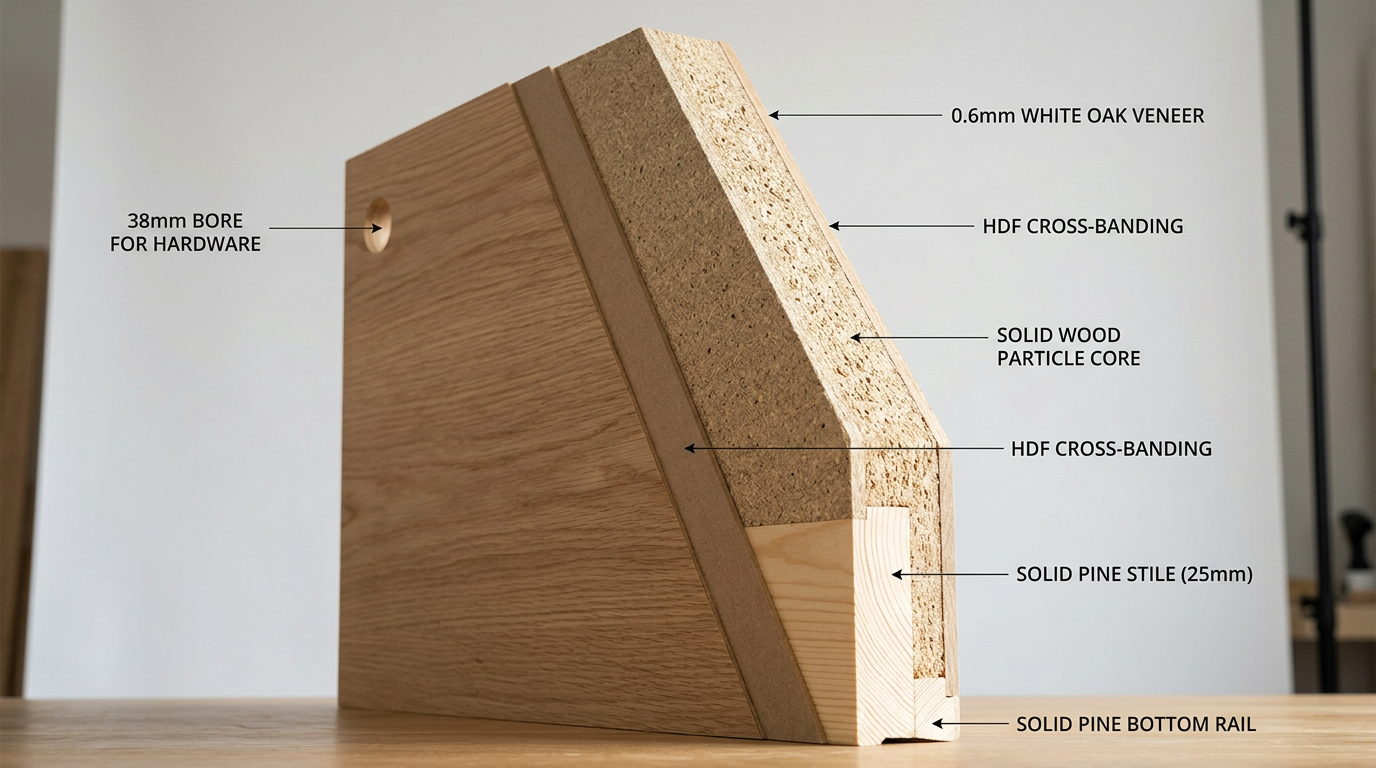
A solid-core door uses an engineered core — often composite or particle material — beneath the face. The result is heavy, quiet, and stable, with much of the feel of solid wood at a lower price. For bedrooms, home offices, and media rooms, solid core is the sweet spot for most homeowners.
Solid wood doors
Built entirely from wood, these are the heaviest and most premium. They offer excellent sound control, real grain, and the ability to be refinished for decades. They cost more and need proper sealing in humid climates.
Quick comparison
- Best value: hollow core for closets and utility spaces.
- Best all-rounder: solid core for bedrooms and offices.
- Best premium feel: solid wood for statement rooms.
Our recommendation
For most Central Florida homes we suggest solid-core or veneer doors in living spaces and bedrooms, reserving lighter options for closets. Explore constructions across our door catalog, and reach out if you want help matching construction to each room.