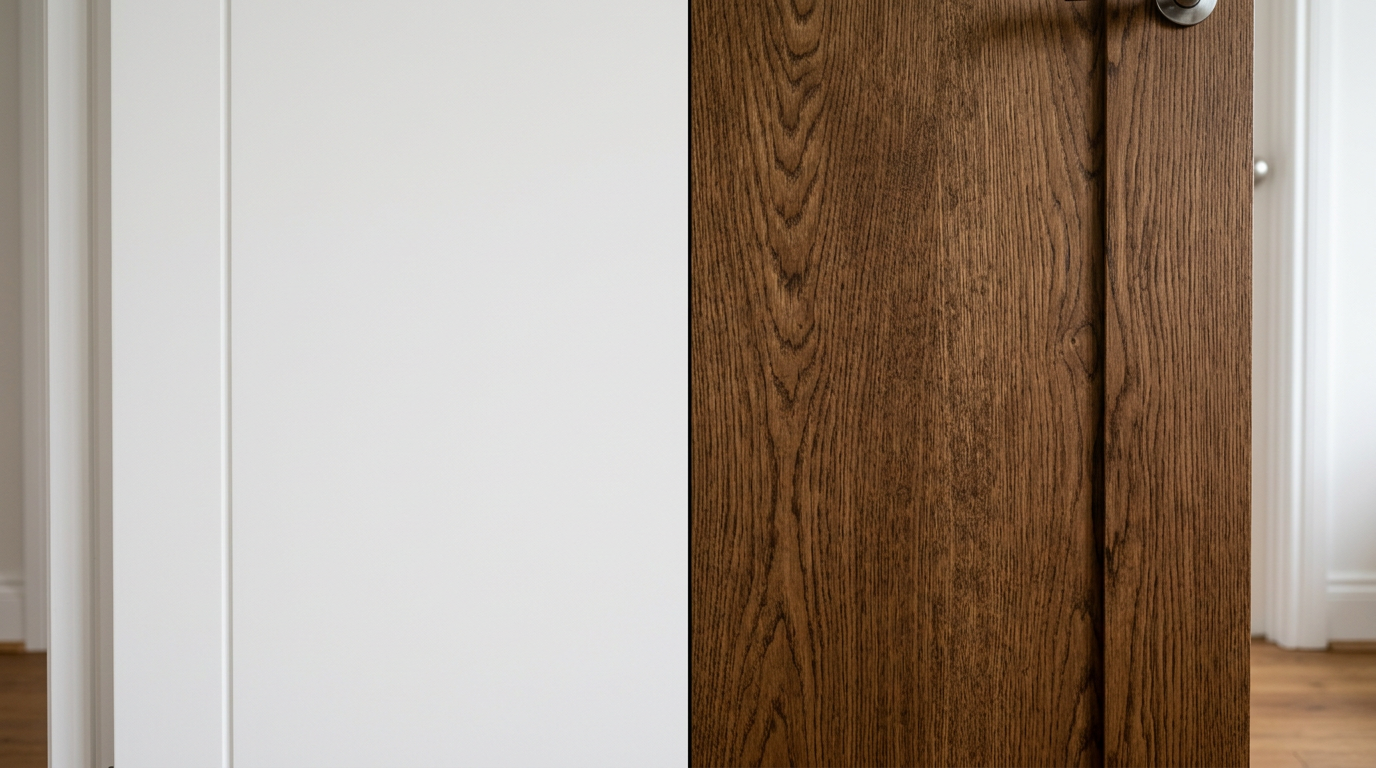
MDF vs. Wood Doors: Which Is Better for Your Home?
Compare MDF and solid wood interior doors on stability, finish, sound, cost, and how each performs in a humid Florida climate.
Choosing between MDF and solid wood is one of the most common questions we hear. Both make excellent interior doors; they simply behave differently. Here is how to decide.
MDF doors
Medium-density fiberboard is engineered from compressed wood fibers. It is dimensionally stable — it will not expand, contract, or split along a grain the way solid wood can — and it takes paint exceptionally well, giving a flawless, seamless finish. That stability is a genuine advantage in Central Florida, where humidity swings challenge natural materials. MDF is also typically the more budget-friendly option.
Solid wood doors
Solid wood offers unmatched natural beauty, real grain, and a substantial feel. It can be sanded and refinished over decades, and premium species bring warmth no engineered product fully replicates. The trade-offs are cost and the need for proper sealing so the door stays stable in humid conditions.
Which should you choose?
- Want a perfect painted finish on a budget? MDF, or a primed door built on an MDF core.
- Want visible natural grain? Solid wood, or a natural wood veneer that pairs a real-wood face with a stable core.
- Worried about humidity? Both work well when finished correctly; MDF and veneer offer extra peace of mind.
A great middle ground
Natural wood veneer doors give you the look of real wood with the stability of an engineered core — often the smartest choice for Florida homes. Browse the options in our veneer collection or primed collection.