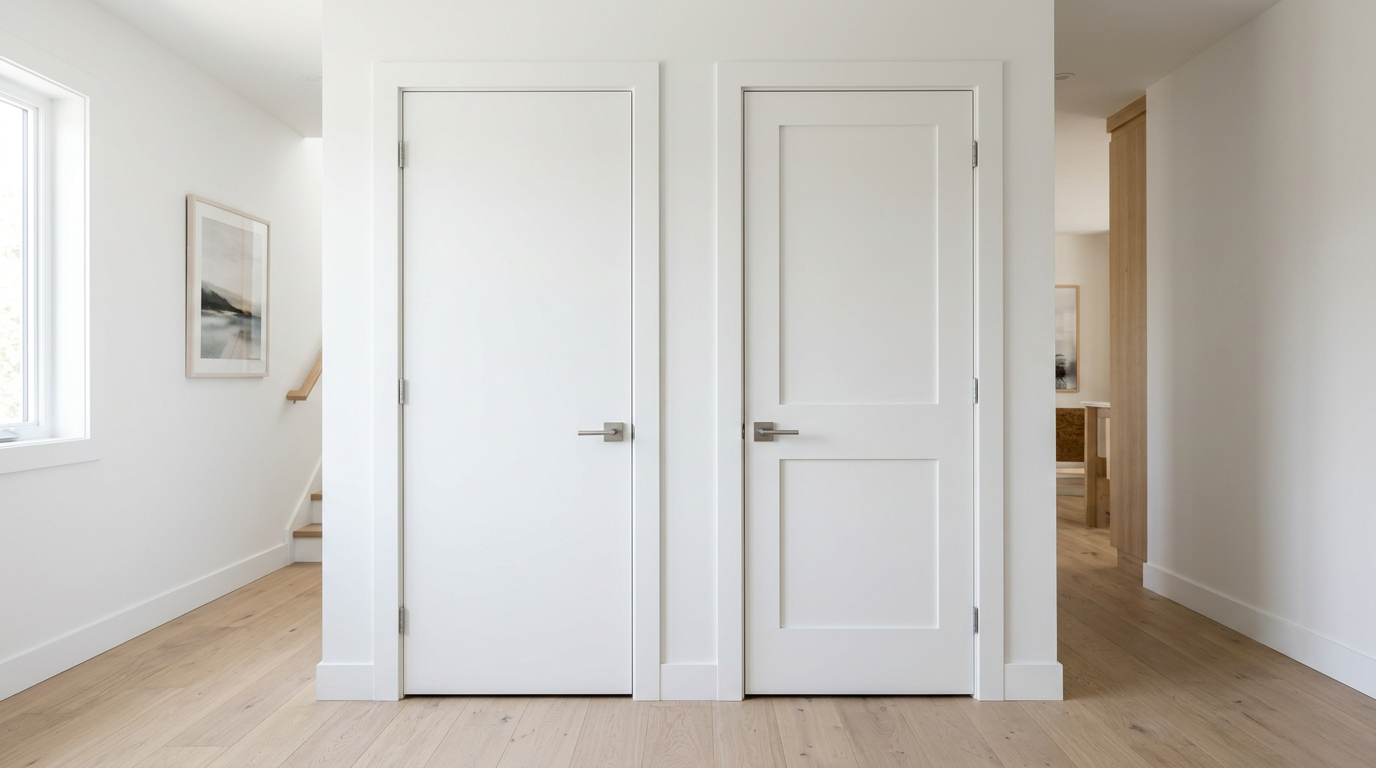
Flush Doors vs. Panel Doors: Which Should You Choose?
A clear comparison of flush and panel interior doors — style, durability, cost, and which one fits your home.
When people say “a door is just a door,” they usually have not stood in a showroom deciding between a flush slab and a paneled one. These two families cover most interior doors sold today, and the right pick shapes the whole feel of a room.
What is a flush door?
A flush door has a smooth, flat face with no raised panels or grooves. It reads as clean and minimal, blends easily with the wall, and is simple to clean. Because there is nowhere for dust to collect and no profile to chip, flush doors are low-maintenance — and when built with a solid core, they are excellent at controlling sound.
What is a panel door?
A panel door is built from stiles, rails, and recessed panels — the familiar Shaker and traditional looks. Panels add depth, shadow lines, and craftsman character, which suits classic, transitional, and farmhouse interiors beautifully.
Head-to-head
- Aesthetics: flush for modern and minimalist; panel for traditional and transitional.
- Maintenance: flush wipes clean fastest; panel profiles need occasional dusting.
- Durability: both are durable when well built; flush faces resist chipping at edges.
- Cost: simple flush doors are often the value pick; detailed panel doors can cost more.
Which is right for you?
If your home leans contemporary — as many new Orlando and Lake Nona builds do — flush and invisible doors keep the look crisp. If you love character and moldings, a Shaker panel door is timeless. Many homeowners mix the two: flush in private areas, panel as a statement on main rooms. Explore both in our primed and veneer collections.